Picking the right neighborhood in Mill Creek can shape your daily routine as much as the home itself. If you are weighing walkability, commute time, outdoor access, or a quieter residential setting, it helps to know that Mill Creek is not one uniform neighborhood. It is better understood as a collection of small housing areas, corridors, and residential divisions with different strengths. This guide will help you narrow your options and compare Mill Creek neighborhoods based on how you actually want to live. Let’s dive in.
Start With How You Live
A good neighborhood choice starts with your day-to-day needs. In Mill Creek, that usually means thinking less about a broad city label and more about your preferred micro-area.
The city reports that Mill Creek has nearly 21,000 residents, 11 neighborhood and community parks, and a network of nature trails. The Mill Creek Community Association also tracks a wide mix of housing types, including 25 single-family neighborhoods, 15 condo complexes, six townhouse complexes, and five apartment complexes. That variety makes lifestyle fit especially important.
Before you compare homes, ask yourself a few practical questions:
- Do you want to walk to errands, dining, and services?
- Would you rather have trail access and a more wooded feel?
- Is a detached home in a quieter residential setting your top priority?
- Do you need quick access to main roads or transit for commuting?
- Would you prefer lower-maintenance living over yard space?
When you know which of these matters most, the neighborhood search becomes much clearer.
Understand Mill Creek’s Layout
Mill Creek was incorporated in 1983, but its housing pattern still feels highly segmented. Instead of one downtown surrounded by identical residential blocks, you will find distinct pockets shaped by subdivisions, greenbelts, and major travel corridors.
In practical terms, that means two homes with the same Mill Creek mailing area can offer very different experiences. One may sit near shops and bus service, while another may feel tucked into trees and trails. Looking at location through that lens can help you avoid choosing a home based on address alone.
Consider Town Center First
Town Center fits walkable lifestyles
If you want a home where daily errands feel easy, start near Mill Creek Town Center. The city describes Town Center as an award-winning lifestyle center developed in 2002 with more than 80 shops, restaurants, and services.
This area is also part of a broader walkable corridor. The South Town Center Subarea is intended to expand housing, shops, jobs, and public gathering space while preserving the North Creek Trail greenbelt nearby.
Housing near Town Center tends to be attached
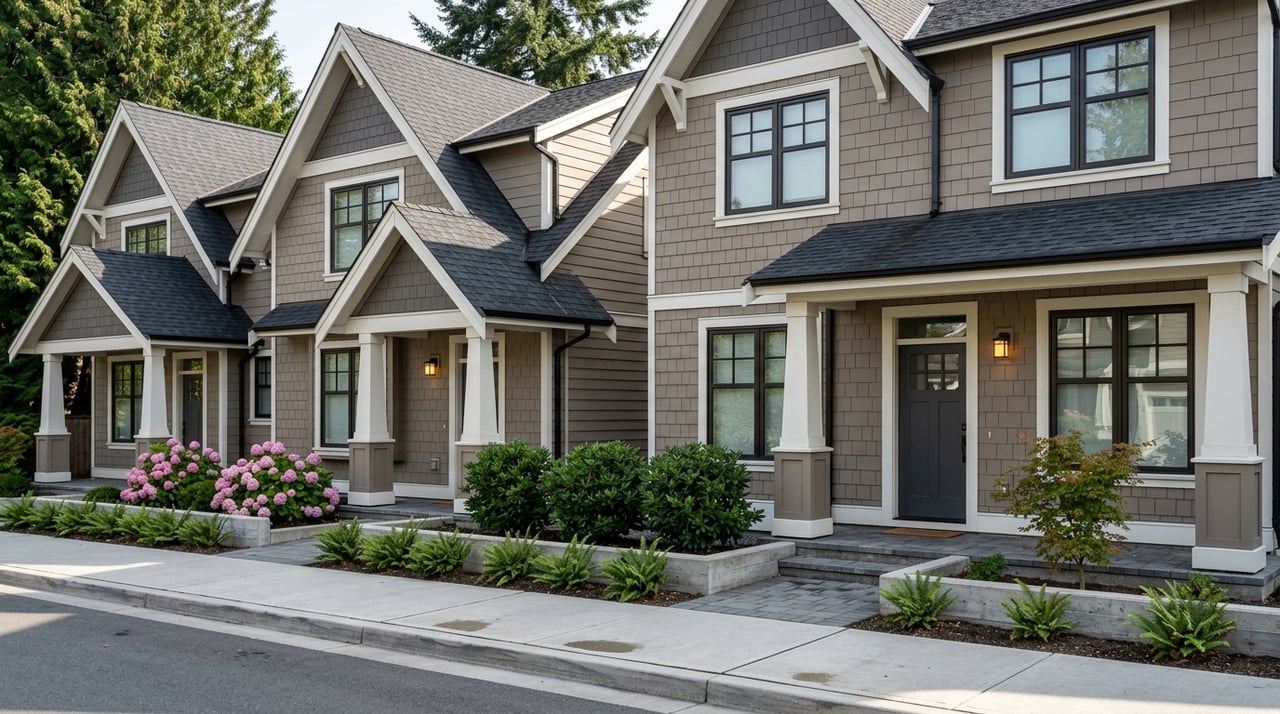
The city’s land use and housing information show more mixed-use and higher-density residential designations around Town Center, Bothell-Everett Highway, and 164th Street SE. Attached housing options in and around the core include Town Center Condos, The Mill Town Square Condos, Laurel Apartments, and The Station at Mill Creek.
For many buyers, this area makes sense if you want lower-maintenance living and easy access to services. It can be especially appealing if yard work is not high on your wish list.
Know the tradeoffs near Town Center
Walkability usually comes with a few compromises. The city’s planning direction and current layout suggest more activity, more traffic, and more redevelopment pressure here than in the quieter residential pockets.
That does not make Town Center better or worse. It simply means the fit depends on whether convenience matters more to you than a more tucked-away feel.
Explore Trail-Adjacent Areas
Parks and trails shape daily life
If you picture Mill Creek as green, wooded, and outdoorsy, you are not imagining it. Parks and trails are one of the city’s defining features.
The city says North Creek Trail runs along the North Creek Greenway from McCollum Park to the southern city limits. It also lists 11 city parks, including North Creek Park, Mill Creek Sports Park, Nickel Creek Park, Heron Park, Highlands Park, Library Park, Pine Meadow Park, Cougar Park, Buffalo Park, and Silver Crest Park.
Some pockets feel more private and tree-lined
Buyers who want easier access to walking paths and a quieter setting often focus on homes near North Creek, park clusters, or the nature preserve. The Mill Creek Community Association also notes that its trail system connects neighborhoods to one another, pocket parks, and the nature preserve.
This part of the city often appeals to buyers who want a more natural setting without leaving suburban conveniences behind. The overall feel can be more buffered from commercial activity.
Confirm what trail access is actually public
This is an important detail in Mill Creek. MCCA notes that some trail and golf-course walkways are private or resident-only.
So if you fall in love with a home because of a path or greenbelt behind it, make sure you verify whether that access is public, MCCA-managed, or part of country club property. That small step can prevent surprises later.
Look at Established Subdivisions
Detached homes are common here
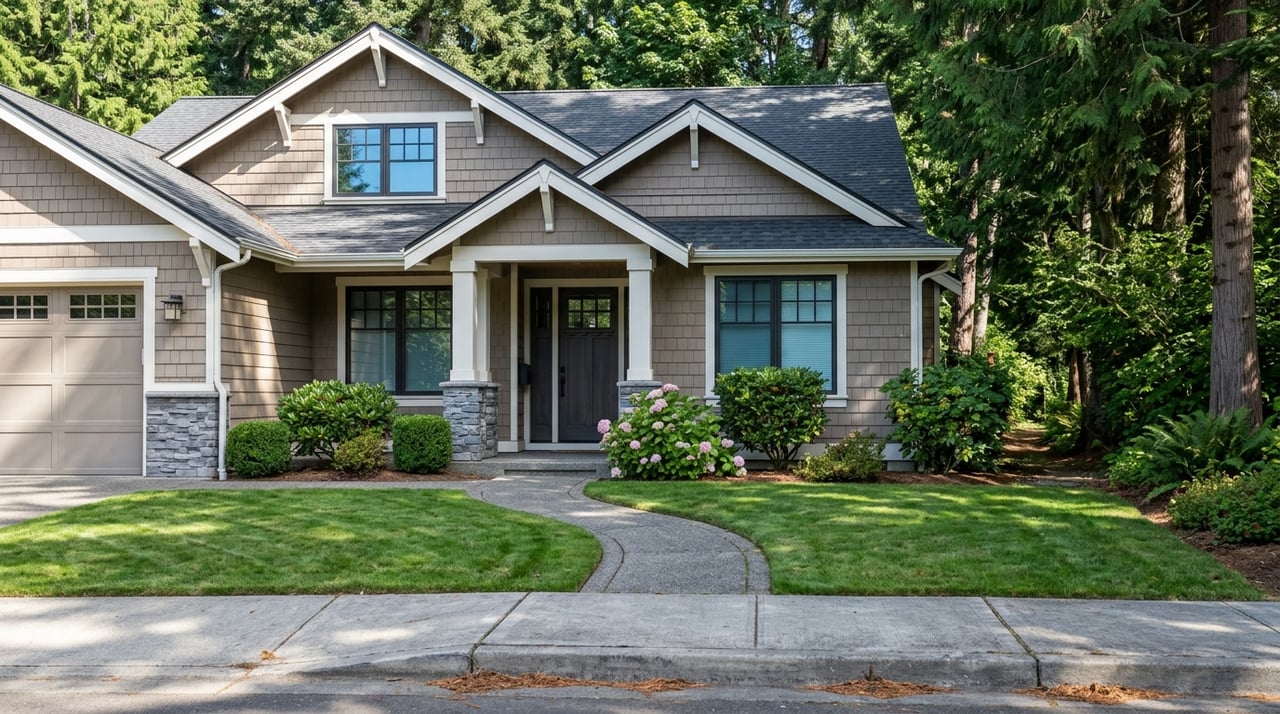
If your ideal neighborhood looks more like a classic suburban setting, established subdivisions may be the strongest fit. Away from Town Center, much of Mill Creek remains division-based and residential in character.
MCCA lists many long-established single-family neighborhoods, including Aspen, Cottonwood, Cypress, Evergreen, Fairway, Holly, Juniper, Magnolia, Red Cedar, Spring Tree, Sunrise, Sun Rose, Sweetwater Ranch, Swordfern, Vine Maple, Willow, Woodfern, and Winslow.
Not every neighborhood is within MCCA
The city’s housing division map also identifies other neighborhoods and complexes that are not part of MCCA. These include places such as Brighton, Dumas Lane, Heatherwood West, Highlands, Highland Trails, Northpointe, Parkside, Penny Creek Estates, Stonehedge, The Auguston, The Hawthorne, The Parks, The Reserve, The Vineyards, and Webster’s Pond.
That distinction matters because neighborhood experience may differ depending on whether a home sits inside or outside the association structure.
Review dues and design rules carefully
If a home is in MCCA, it is smart to look beyond the house itself. MCCA says residents have access to trails, pocket parks, the nature preserve, and social programming, but most exterior projects require Architectural Control Committee approval.
For some buyers, that structure is a plus because it helps maintain common areas and neighborhood standards. For others, it adds an extra layer to consider if you plan to change paint colors, update exterior features, or tackle projects soon after moving in.
Prioritize Commute Practicality
The corridor often matters most
In Mill Creek, commute convenience often depends less on the neighborhood name and more on your distance to the main travel spine. The city’s land use map highlights Bothell-Everett Highway or SR 527, 164th Street SE, Seattle Hill Road, and 156th Street SE as key corridors.
If you commute often, this should be one of your first filters. A home that looks perfect on paper may feel less convenient if it sits farther from the routes you use every day.
Transit access is stronger near major roads
Community Transit says Swift buses are fast and frequent, with weekday service every 10 minutes. The Swift Orange Line runs between Edmonds College in Lynnwood and McCollum Park Park & Ride in Mill Creek, and it shares stations with the Swift Green Line on Bothell-Everett Highway in Mill Creek.
The Mill Creek detail map also shows nearby hubs at Ash Way, Mariner, and McCollum Park & Ride. Sound Transit’s current map shows Link 1 Line service between Lynnwood and Federal Way, along with ST Express routes connecting Everett, Lynnwood, Seattle, and Bellevue.
Quieter locations may trade off convenience
As a practical reading of the maps, homes closest to Bothell-Everett Highway and Swift stations are usually the most transit-convenient. Homes in edge-of-city subdivisions may offer a quieter residential feel, but they can require more driving to reach transit and major roads.
That tradeoff is not a problem if you know it upfront. It becomes a problem only when commute realities show up after closing.
Match Your Priorities to Area Type
If you want a simple way to narrow your search, this framework can help:
- Choose Town Center if walkability, errands, dining, and lower-maintenance housing are top priorities.
- Choose trail-adjacent pockets if you want more greenery, easier access to parks and paths, and a quieter setting.
- Choose established subdivisions if you prefer a more traditional suburban neighborhood with more detached-home options.
- Choose corridor-close locations if transit access or daily driving time matters most.
In many cases, the best answer is not the most popular area. It is the one that supports your routine with the fewest compromises.
Use a Home Tour Strategy
Online searching is useful, but Mill Creek is one of those markets where touring by area can teach you more than reading listings. Try grouping your tours by neighborhood style instead of only by price or square footage.
For example, you might compare one Town Center condo, one trail-adjacent home, and one house in an established subdivision on the same day. That side-by-side experience can quickly show you what feels right and what does not.
Pay attention to things like:
- Traffic flow on nearby roads
- Distance to parks, shops, or trailheads
- Housing density and lot spacing
- General noise and activity levels
- Ease of getting in and out of the area
These details are hard to judge from photos alone, but they often shape long-term satisfaction.
Why Local Guidance Helps
Because Mill Creek works as a network of micro-areas, buyers often benefit from neighborhood-level comparisons instead of broad citywide assumptions. A knowledgeable local agent can help you weigh the practical differences between attached housing near Town Center, homes near greenbelts, and established subdivisions with association structure.
That kind of guidance is especially helpful if you are relocating, moving up, or trying to balance lifestyle goals with commute needs. The right neighborhood choice is usually a blend of home type, access, and daily convenience.
If you want help narrowing down the right fit in Mill Creek, connect with Steve Knoblaugh for practical, local guidance tailored to your goals.
FAQs
What is the best Mill Creek area for walkability?
- If walkability is your priority, the Town Center area is usually the best place to start because it has more than 80 shops, restaurants, and services nearby, along with attached housing options around the core.
What should buyers know about trails in Mill Creek?
- Mill Creek has strong access to parks and trails, including North Creek Trail and multiple city parks, but some trail and golf-course walkways are private or resident-only, so access should be confirmed before you buy.
Are all Mill Creek neighborhoods part of MCCA?
- No. Some neighborhoods are part of the Mill Creek Community Association, while others shown on the city housing division map are outside MCCA, so it is important to confirm whether dues and architectural rules apply to a specific home.
What kind of homes are near Mill Creek Town Center?
- The city’s housing information shows more attached and higher-density housing near Town Center, including condos and apartments, which often appeal to buyers looking for lower-maintenance living.
How do you choose a Mill Creek neighborhood for commuting?
- If commute time matters, focus on how close a home is to Bothell-Everett Highway, 164th Street SE, Seattle Hill Road, 156th Street SE, and nearby Swift or park-and-ride connections rather than relying only on the neighborhood name.
Is Mill Creek more suburban or urban?
- Mill Creek offers both, but in smaller pockets. Town Center is the most urban and walkable area, while many other parts of the city feel more like classic suburban subdivisions with parks, trails, and quieter residential streets.