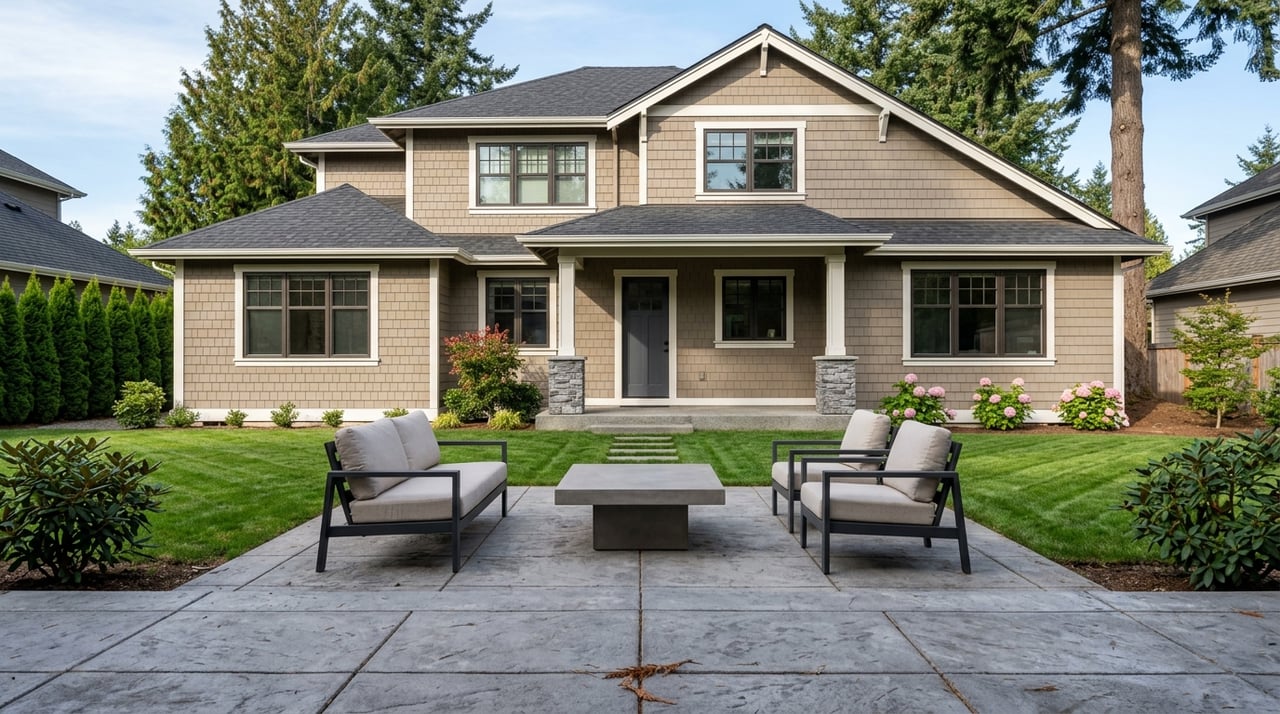
Wondering whether you should get more space or simplify your setup in Snohomish? That question is more complicated than it sounds, especially in a market where homes can sell quickly but replacement options may still be expensive. If you are weighing a move, this guide will help you look at the local market, housing options, and planning factors that can shape the right next step for you. Let’s dive in.
Snohomish market conditions matter
If you are thinking about upsizing or downsizing in Snohomish, your decision is not just about square footage. It is also about what your current home may sell for and what your next home will cost.
Recent market data points to a seller-leaning environment in Snohomish. Redfin reported a March 2026 median sale price of $860,000, homes selling in about 13 days on average, and roughly 2 offers per home. Realtor.com also showed March 2026 listing data with about 266 homes for sale, a median list price near $999,950, and a 26-day median time on market.
Countywide conditions tell a similar story. NWMLS reported 2.92 months of inventory in Snohomish County in April 2026, which is still below the 4 to 6 months many observers consider balanced. That means you may have a solid opportunity to sell, but buying your next home could still feel competitive.
When upsizing makes sense
Upsizing usually makes sense when your current home no longer fits your daily life. You may need more bedrooms, a better layout, more work-from-home space, or a larger yard.
In Snohomish, that can be a realistic goal because the city’s housing stock is still dominated by detached single-family homes. The city’s housing analysis says nearly two-thirds of local housing is detached single-family, and zoning patterns support larger lot sizes in many residential areas.
That local housing mix can work in your favor if you want more room. Many larger homes in Snohomish are tied to the suburban setting people often want when they are moving up.
Signs you may be ready to upsize
You may be ready to move up if:
- Your household needs more bedrooms or flexible living space
- Your current floor plan feels tight or inefficient
- You want a larger lot or more outdoor space
- You expect to stay in the next home for several years
- You can comfortably manage the higher purchase price and ownership costs
The main tradeoff for move-up buyers
The biggest challenge with upsizing in Snohomish is the price gap between the home you are selling and the home you want to buy next. Your current home may sell well in a seller-leaning market, but the replacement home may also come at a premium.
That is especially important in Snohomish, where city sale prices appear to run above the countywide median. In simple terms, moving up locally may mean paying meaningfully more for the features you want.
Budget for the full move
When you upsize, focus on net cost, not just sale price. Purchase closing costs often run about 2% to 5% of the home price, and seller closing costs and commissions can also reduce your final proceeds.
A smart move-up plan should account for:
- Your expected sale price
- Mortgage payoff on your current home
- Seller closing costs
- Down payment for the next home
- Buyer closing costs
- Moving expenses
- Any repairs or updates needed before listing
For many homeowners, this is where careful pre-sale planning matters. If your goal is to maximize your sale before buying up, a well-prepared listing can make a meaningful difference.
When downsizing makes sense
Downsizing is not just about having less house. Often, it is about wanting a simpler home that is easier to maintain and better matched to your current lifestyle.
That conversation is especially relevant in Snohomish. Census estimates show that 20.1% of residents are age 65 or older, and the city’s housing planning documents identify senior households as an important local housing need.
You may be thinking about downsizing if you want:
- Less yard work and exterior upkeep
- Fewer unused rooms to clean and maintain
- A more practical floor plan
- Lower monthly ownership costs
- A home that better fits your next stage of life
Downsizing in Snohomish can be harder than expected
The challenge is that smaller housing options can be limited. Snohomish remains heavily weighted toward detached single-family homes, which means there may be fewer true downsizer choices than many homeowners expect.
The city’s 2024 Housing Element found 1,353 one-person households but only 521 one-bedroom units in the city, with 490 of those being rentals. That mismatch suggests that if you want a much smaller home in Snohomish, you may need to act quickly or expand your search.
What downsizers may actually find
In Snohomish, downsizing may not always mean moving into a very small ownership unit. In practice, you may be comparing options such as:
- A smaller detached house
- A townhouse
- A condo
- A home outside the city with a better size fit
That makes it important to define what downsizing really means for you. For some homeowners, the goal is less square footage. For others, it is a simpler layout, a smaller lot, or fewer maintenance demands.
Should you stay instead of move?
Sometimes the best answer is neither upsizing nor downsizing. If you like your location but need your home to function differently, staying put may be worth exploring.
Snohomish allows accessory dwelling units, subject to permitting and code compliance. Depending on your property and goals, that could create more flexibility without requiring a full move.
For example, staying may make sense if you want to:
- Create space for multigenerational living
- Add a more private work area or guest setup
- Adjust how you use the property instead of changing addresses
This option will not fit every homeowner, but in a market with limited inventory, it can be a practical middle ground.
Key questions to ask yourself
Before you decide, step back from the emotional side of moving and look at the basics. The right choice usually becomes clearer when you compare lifestyle needs with financial reality.
Questions for upsizers
Ask yourself:
- How long will the next home meet your needs?
- Can you afford the higher purchase price and closing costs?
- Would a better layout solve your problem without a major jump in size?
- Do you want to stay in Snohomish specifically, even if that raises your replacement cost?
Questions for downsizers
Ask yourself:
- Do you want less space, less maintenance, or both?
- Are you open to a townhouse or condo?
- Would moving outside Snohomish provide more options?
- Is your current home still serving you well enough to stay a few more years?
Taxes and planning for older homeowners
If you are an older homeowner, taxes should be part of the conversation. Washington offers a senior and disabled property tax exemption program for homeowners who meet age, occupancy, and income requirements.
According to the Washington Department of Revenue, one qualifying age threshold is being at least 61 by December 31 of the assessment year. Snohomish County says the 2026 disposable income threshold for the exemption program is $75,000, and the home must be your principal residence in the county for six months per calendar year.
That does not mean every downsizer will qualify, but it does mean tax treatment can affect your net housing cost. Before you move, compare your current property taxes, likely sale proceeds, and the expected tax picture for the next home.
Snohomish County also notes that 2026 taxes are based on January 1, 2025 revaluation values and annual levy rates. That is another reason to look beyond headline price and focus on the full cost of ownership.
A simple way to decide
If you are stuck between upsizing and downsizing, use this simple framework:
- Upsize if your home no longer supports your daily life and you can comfortably afford a more expensive replacement home.
- Downsize if maintenance, unused space, or long-term practicality matter more than having extra room.
- Stay and adapt if you like your property and location but need a more flexible setup.
In Snohomish, this decision is shaped by a seller-leaning market, a housing stock heavy on detached homes, and a tighter supply of smaller units. That means there is no one-size-fits-all answer, but there is a right answer for your goals.
If you want help comparing your sale potential with what your next move could look like, a local strategy matters. The right plan should focus on your timing, your net proceeds, and the kind of home that will serve you well in the years ahead.
If you are weighing your next move in Snohomish, Steve Knoblaugh can help you map out your options with a clear, practical plan built around your goals.
FAQs
Should you upsize or downsize in Snohomish’s current market?
- It depends on your lifestyle needs and your budget for a replacement home. Snohomish is still a seller-leaning market, which can help your current home sell, but your next home may also cost more than expected.
Is Snohomish a good place to find a larger home?
- Snohomish has a housing stock that is still dominated by detached single-family homes, so buyers looking for more space, more bedrooms, or a larger lot may find options that fit those goals.
Is it hard to downsize within Snohomish?
- It can be. The city has limited smaller-unit supply compared with local household needs, so downsizers may need to move quickly, broaden their search, or consider a smaller house, townhouse, or condo.
Can you stay in your Snohomish home instead of moving?
- In some cases, yes. Snohomish allows accessory dwelling units, subject to permitting and code compliance, which may give you another way to make your property work better without relocating.
What should older homeowners in Snohomish know about property taxes?
- Some older homeowners may qualify for Washington’s senior and disabled property tax exemption program if they meet the age, income, and occupancy requirements. Snohomish County says the 2026 disposable income threshold is $75,000.